Game history
Player killers and the price of a red name in Ultima Online
At fourteen, Ryan Bruns could afford a house in Ultima Online. He had spent weeks mining ore on the Atlantic server to buy the deed. The trouble was finding a patch of ground to build on. Another player offered to show him one and opened a magical gate. Bruns stepped through with the deed. On Deceit Island a player killer ambushed him. From beside his own body, Bruns watched someone take the deed. Years later UO players on the Hokuto server would know him as Evil M. By then he was the one doing the hunting. Ryan Bruns in Wes Locher’s Braving Britannia
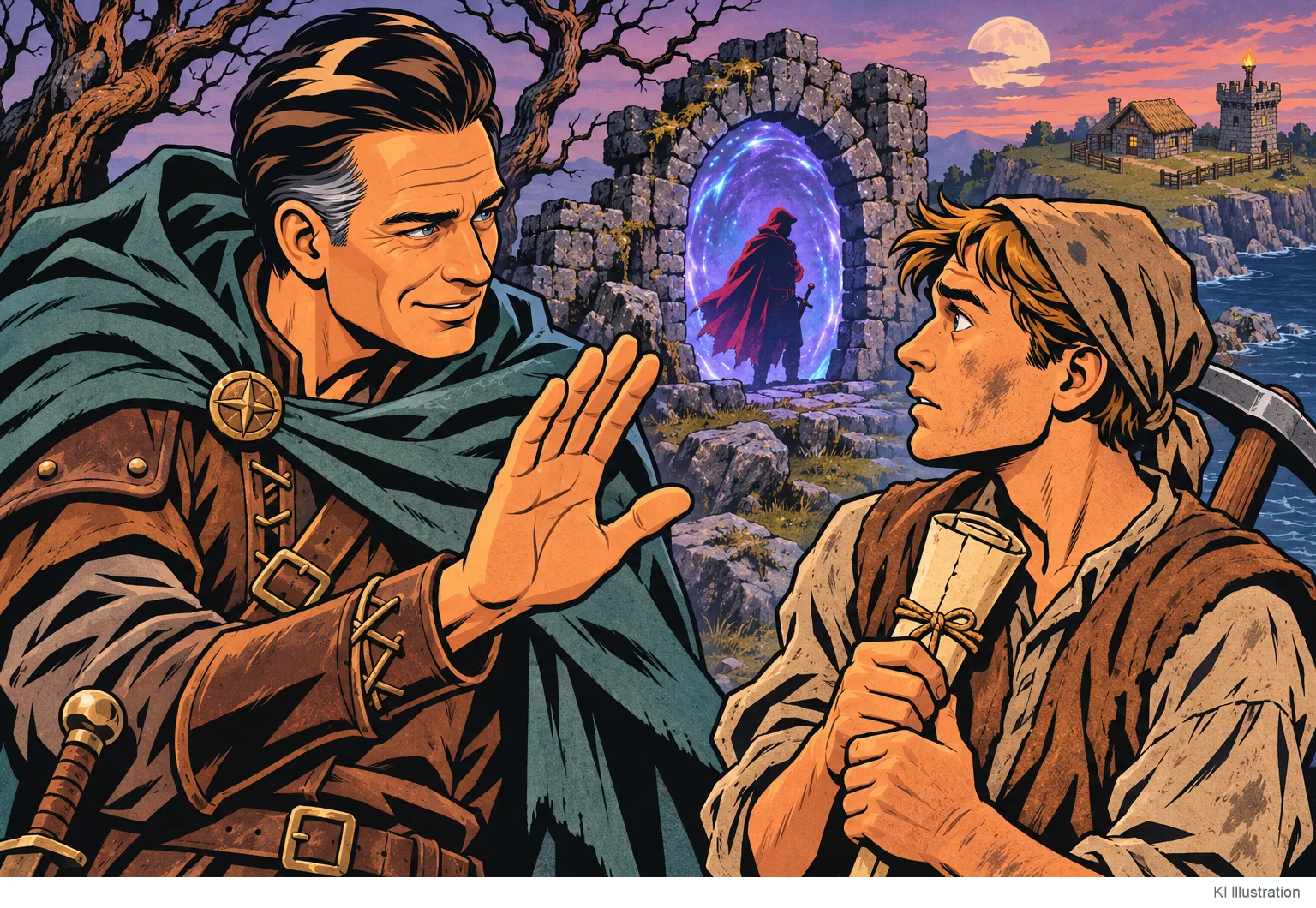
What a miner stood to lose
Resurrection could give Bruns his character back. It could do very little about the house. The deed took up a single spot in a pack, yet the person who mined the ore and the person who looted the body had very different ideas of what it was worth. One had given up a succession of evenings to earn it. The other had just acquired all those evenings’ work in a single encounter. In a world where you could make a living supplying your neighbours, a good deal of what made robbery profitable came from the patience of the people being robbed.
Both a duel and an ambush counted as player-versus-player combat, or PvP. Only one of the two people at the far end of that gate had logged in looking for a fight. That distinction was what players were usually getting at when they called somebody a PK, short for player killer. It also explains why a perfectly ordinary offer of help could give a traveller pause. Opening a gate was something a generous stranger could do for you. The person after your belongings could extend exactly the same courtesy.
A price on the town noticeboard
How could a game tell a murder from a duel? In December 1997 Origin gave some of that decision to the person lying dead. If the victim qualified, a window offered the choice of reporting the killing. The patch notes invited players to use their judgment. A spell gone astray, a piece of role-playing both sides enjoyed and an arranged guild battle could all leave a corpse on the ground. The person at the keyboard knew things the server had no way of recording. Origin’s patch notes for December 9, 1997
Enough reports could cost an outlaw the contents of the bank. Any gold there went towards a local bounty. A notice on the nearest board gave the culprit’s name, identifying features down to the haircut, and the names of some of the victims. To collect, a bounty hunter had to return the outlaw’s head to a guard near the right board. Another town might offer a different sum for the very same fugitive. Stopping to read the notices gave you a peculiar kind of local news. There was a decent chance of meeting the people in it.
How long did a murderer stay red?
In 1998 the colour of a character’s name became an important piece of information for anyone out on the roads. Blue meant innocent in the eyes of the game. Red identified a murderer. Grey could signal a temporary right to fight back, and what you saw depended on who you were. If a badly placed area spell caught you, the caster could appear grey to you and still look blue to a bystander. Anyone rushing to help a friend had good reason to ask what had happened first. UO designer Raph Koster on the reputation system
Five active murder reports turned a character red. Other players were free to attack, and town guards made a trip to the bank a dangerous undertaking. One report wore off for every eight hours of play. That left room for the players known as blue PKs. Someone who spaced out the killings could meet the next stranger on the road with an apparently innocent name. From the stranger’s end of the screen, the fellow might look every bit as respectable as yesterday’s victim.
On March 28, 1999, Origin added a slower count alongside the original one. Five reports on the new count also turned a player red, but it took forty hours of play to shed one of those. The risk of losing character stats on death still depended on the shorter count. Two people displaying the same red name could therefore have quite different amounts at stake if the next fight went badly. For a traveller trying to judge the person ahead, the colour was evidence of past reports. It offered little guidance about what that person intended to do in the next few seconds. Origin’s March 1999 changes to blue PKs
Five strangers in Covetous
On the Napa Valley server, three archers and two mages were hunting harpies in the dungeon Covetous when a passing player stopped to warn them of incoming PKs. One of the archers later told the story for the official UO site. Writing in 2012, the player placed it somewhere around the autumn of 1998. The five belonged to no common guild. They headed deeper inside and found a long hallway where no more monsters would spawn behind them. Then they waited. Players’ memories from the Napa Valley shard
The attackers came dressed alike. The two mages laid down fire fields across the approach. What astonished the archer, even in retrospect, was that all three bows found the same target. One attacker went down almost immediately. The PKs regrouped, the fight went on and in the end both sides withdrew. A draw was a remarkable result for someone accustomed to being run off by organised hunting parties. It owed a great deal to a sixth player whose name the account never gives. That person could easily have kept running.
The people who hunted the hunters
Some players made a more lasting arrangement out of defending one another. Dragons, who founded the guild The Syndicate, drew his line at jumping a newcomer who was trying to mine a little ore. His guild enjoyed taking the fight to organised PK guilds. Looking back, though, he saw a flaw in the idea that this would teach the outlaws a lesson. Suppose someone went out on a Friday evening looking for a good scrap. As punishment, you had just sent an entire guild of willing opponents. An interview with Syndicate guild leader Dragons
You might save a miner, make a defender’s evening and give the PK every reason to log back in tomorrow. Whether the expedition had worked depended on whom you asked. Even friends could have trouble telling what the attacker intended. Visiting the Insidious Brotherhood in 1998, reporter Amy Jo Kim watched one guild member aim a fire spell at another. It caught her character, DarkStarr, and killed her on the spot. Kim left open whether lag or the man’s aim was to blame. Amy Jo Kim’s May 1998 dispatch for Wired
Two ways through Britannia
With Ultima Online: Renaissance in April 2000, a player could make a choice before setting out. The existing land became Felucca. Trammel put familiar territory under a different set of rules. A stranger there could no longer cut you down while you mined. Guild wars remained possible. In Felucca an unsolicited fight was still one of the hazards of the road. The Siege Perilous server was an exception to the rollout. It received no Trammel facet with that update. Origin’s Renaissance rules of April 27, 2000
A miner with a house deed could go looking for a plot without having to supply a bandit with the evening’s entertainment. Anyone setting out in Felucca knew what the other traveller on the road was allowed to do. Something changed for the well-meaning stranger, too. A warning had been worth so much in Covetous because five people who had never agreed to fight had a few seconds in which to decide to stand together.
What you remember about the PKs of Britannia depends on whom you follow home. For the Napa Valley archer, a fight nobody won was still worth writing about years later. For Bruns the lasting image was an item disappearing from a corpse. The next time he set out, Britannia had one fewer miner and a player killer in the making.